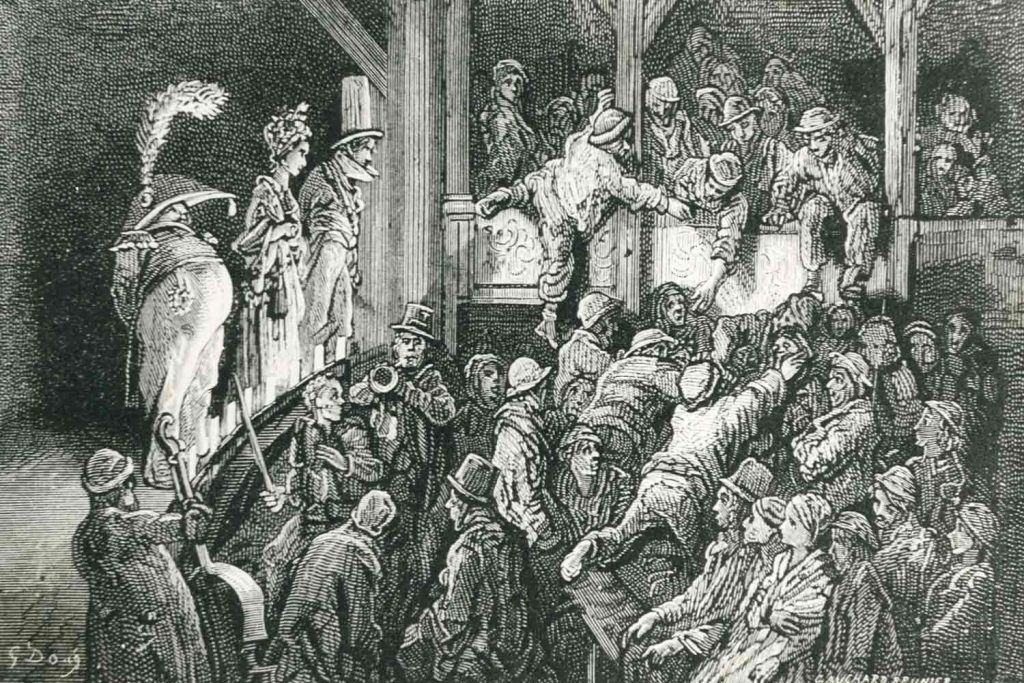
The history of the music hall is complex and involved. Suffice it to say that what we would today recognise as mucic hallarose from the numerous different forms of popular entertainment which swirled around London and the provinces in the 1830s and 1840s.
It gave the opportumity for the performance of all types of material from what we would today consider to be circus acts such as tumbling and trapeze work through singing, comedic acts and of course dance.
Unlike legitimate theatre, music hall was essentially a working class entertainment and, becasue of the way it evolved, gave opportunities for performers lacking what might be regarded as professional mainstream training to not only earn a living but occasionally to become stars. Because of this, by the 1850s and 1860s theatrically trained clog dancers began to be replaced by those with a more cosmopolitan background.
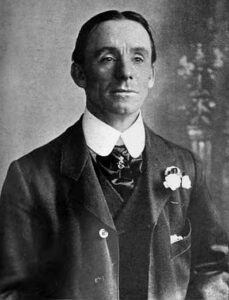
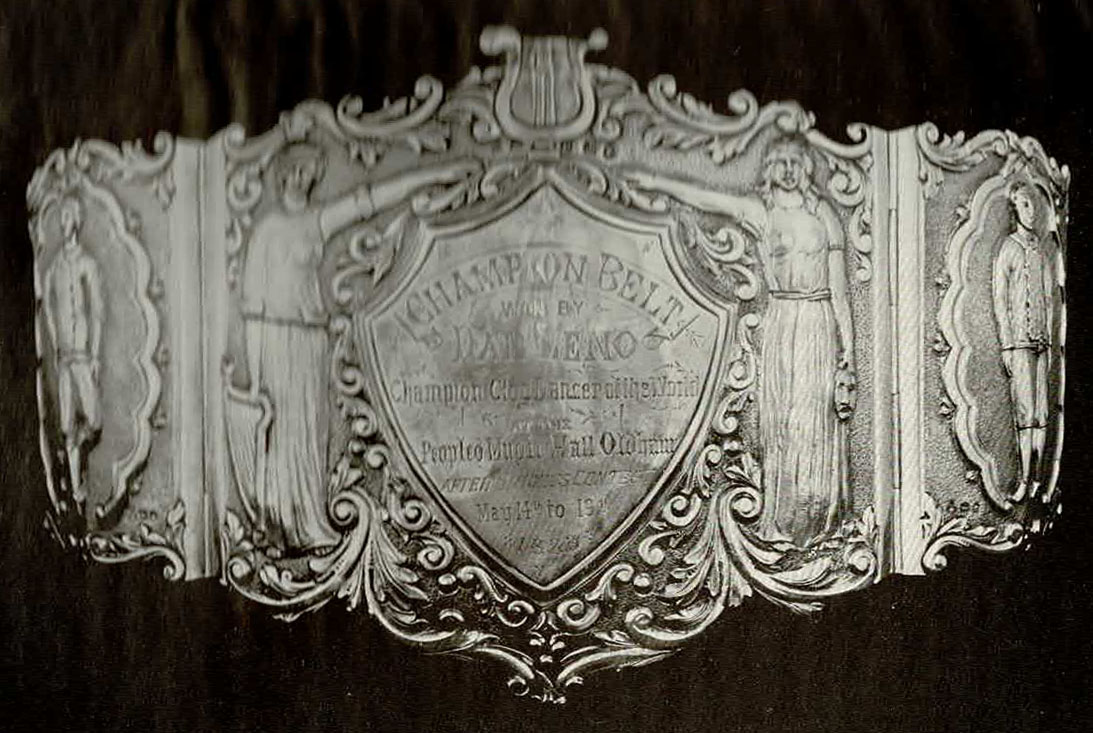
The first individual who might be considered to have made a name for himself was John Booth of Bolton, Lancashire. He was clearly a local dancer who, by 1848, managed to access the music hall stage successfully. Unfortunately no image of him survives. However, he was only the first of a great many, including of course the most famous cllog dancer of then all, Dan Leno.

Competitions
Almost from the beginning clog dancers were billing themselves as champion dancers of one sort or another. By 1880 music hall promoter J.H. Wood created "world championship" competitions. These ran, until the early 1900s, albeit rather intermittently. Nonetheless they had a huge effect, fuelling in great part the clog dance craze which did not perer out until the First World War,