Frederick Ball – Champion Clog Dancer of the Mediterranean

In an article from The Daily Malta Chronicle (14/5/1900 p. 2)  we read, ‘The Variety Company of HMS Revenge gave their first performance since their Commission in December last, on Wednesday and the following evenings last week. A rare amount of talent is to be found amongst the members of the crew, but naturally it takes time to organise the material, and prepare it for presentation to the large and critical audiences, always to be found at the Clarence Theatre.’  And later in the same article – ‘Ball also gave a solo dance, receiving rounds of encouraging applause. This dancer is one of the best we have seen at the Theatre and this is saying a great deal, for amongst so many men in the Fleet there are scores of good dancers.’

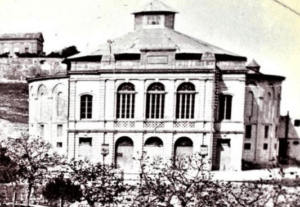
HMS Revenge was posted to the Mediterranean and based at the Naval Dockyard in Valletta, Malta. The Clarence Theatre or Royal Clarence Theatre appears to have been based in the Naval Canteen. By August 1900, Ball had been posted to HMS Victorious and, from a performance at the same theatre in that month we learn that he was, in fact, a clog dancer – ‘one of the best dancers we have seen in Malta for some time’ (op cit 11/8/1900 p. 3).

Later that year, on the 8th September, F.G. Ball appeared at the Britannia Circus, Floriana, just outside Valetta, (left) when he was billed as a “Champion Clog Dancer”. The advertisement flyer suggests a fairly professional show.  The theatre had opened in 1899.  The site was just opposite one of the main barracks and married quarters on the island and must have relied on the army and navy extensively for its clientele.  Booking a naval clog dancer must have been considered a good attraction!

In July of 1901 an accident occurred aboard HMS Daring resulting in a number of deaths.  The performers of HMS Victorious quickly arranged a benefit for the families of those lost.  F.G. Ball is billed again as a ‘Champion Clog Dancer”  (op. cit. 22/7/1901 p.3).  He is in the centre at the back in the photograph.

It would appear that there was a yearly clog dance competition between the Navy and Army personnel based in the region and the following month it was reported, ‘At Alexanders Pavillion, a special dancing contest for the Navy and Army was held, in which Ball, of HMS Victorious, proved an easy winner.’ (op. cit. 3/8/1901 p.2).

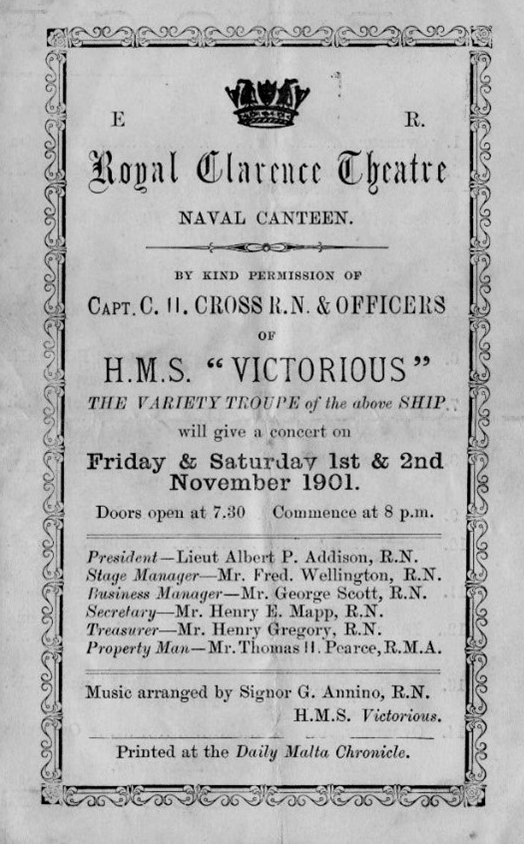
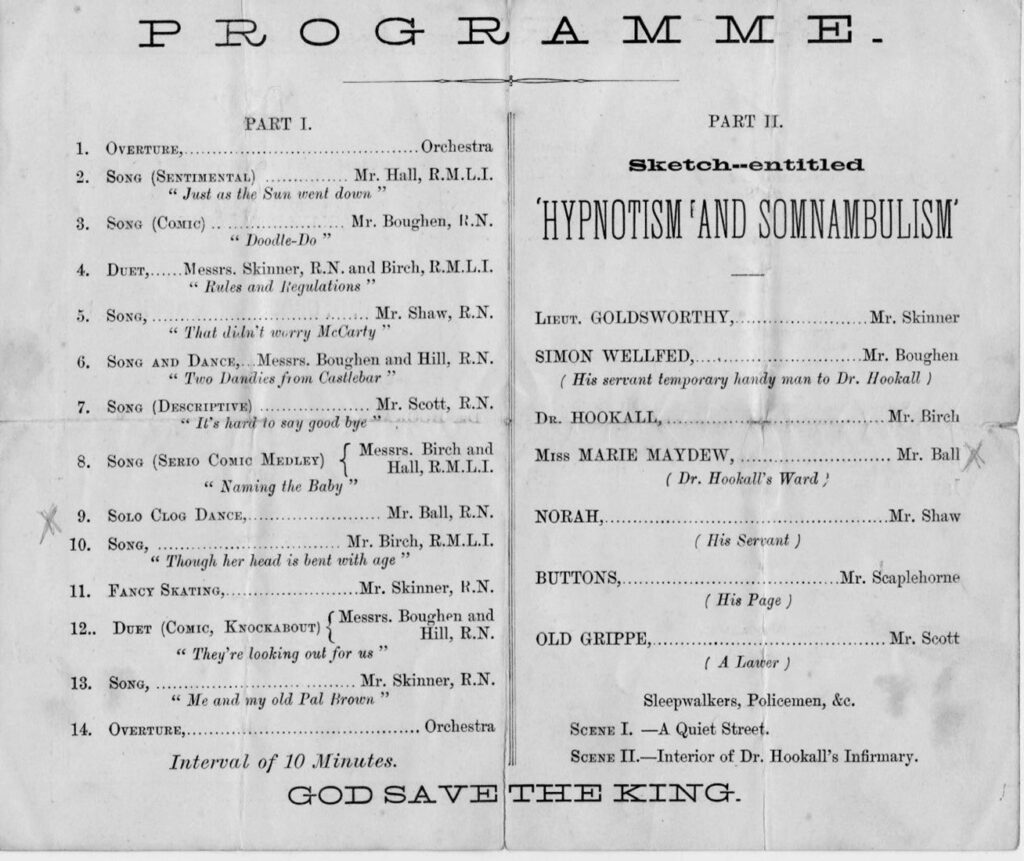
Later in the year he appeared again at the Royal Clarence and during the show, which featured singers, musicians, comics and dancers, ‘Mr. Ball, R.N., the Champion Clog Dancer of the Mediterranean scored another great success in the Clog Dance. He is a very graceful and clever dancer and deserved the prize he won.’ (op. cit. 5/11/1901 p3).

Ball’s final traced appearance was again at the Royal Clarence in December 1902 when he gave a “brilliant exposition of a clog dance, he being an able exponent of the terpsichorean art, repeatedly bringing down the house.’ (op. cit. 30/12/1902 p. 4).  By then, still on Victorious, he had been promoted to Leading Seaman.

Frederick George Ball was born on 11 April 1875 at Lambeth, Surrey. His parents were Thomas, who was a railway night worker and Maria. He was the third of ten children. He joined the Navy aged 16 classified as a boy. His first ship was HMS Boscawen based at Portsmouth. At this time he was described as 5’5” with a fair complexion, brown hair, blue eyes and with a scar on his left knee. By the time he was classified as a man he had grown to 5’71/2”.

Fred married Marsha Emily Symonds on 20 December 1903 at St Andrew’s, Earlsfield, Wandsworth. A son, Frederick Ernest William, was born in 1904. In 1906 Fred was serving as a Petty Officer 1st Class on Portsmouth based HMS Hecla and living with his family at 4 Telephone Road, Southsea. Sadly, on 3 November Fred collapsed and died, at the young age of 31, from an aneurism and syncope and is buried in Portsmouth.

Our thanks go to Frederick’s grandaughter, Tina Smith, for providing much of the information.